In the fast-paced world of financial markets, active traders constantly seek instruments that offer flexibility, liquidity, and the ability to react quickly to market movements. Among these instruments, Contracts for Difference, commonly known as CFDs, have grown increasingly popular.
CFDs allow traders to speculate on the price movements of assets without owning the underlying securities, offering unique opportunities for both short-term gains and diversified trading strategies. Understanding why CFDs attract active traders requires a closer look at their structure, advantages, and practical applications in contemporary trading.
Understanding CFDs and Their Appeal
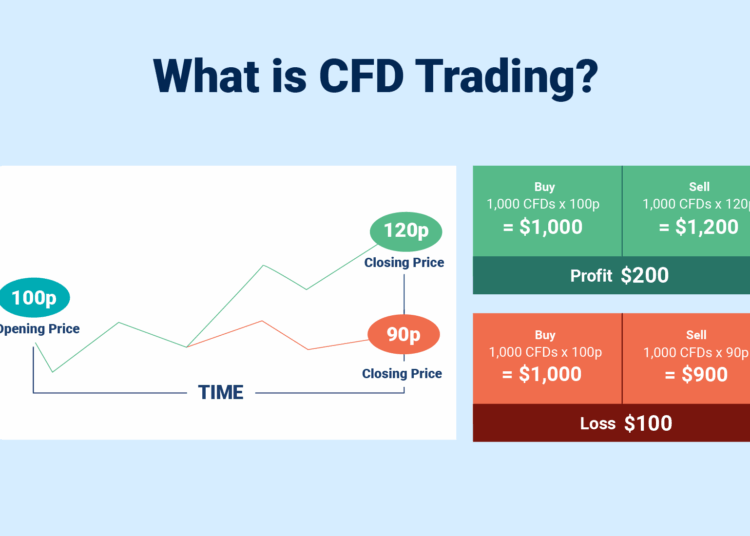
A Contract for Difference is a financial derivative that enables traders to profit from the rising or falling prices of a wide range of assets, including stocks, commodities, indices, and currencies. Unlike traditional investing, where ownership of the underlying asset is required, CFDs allow traders to enter positions with relative ease and manage them efficiently. This structure is particularly appealing to active traders, who prioritise speed, precision, and adaptability in their trades.
One of the main appeals of CFDs is the ability to take both long and short positions. This means traders can potentially profit from both upward and downward market movements. In volatile markets, this dual capability provides a significant advantage, allowing traders to respond to changing conditions without the limitations of traditional buying and selling.
Liquidity and Market Access
Active traders often prioritise liquidity and accessibility, both of which are central to the CFD experience. Most CFDs are linked to highly liquid underlying assets, ensuring that traders can enter and exit positions quickly without significant slippage. This responsiveness is crucial for day traders, scalpers, and others who operate on tight timeframes and need to react immediately to market signals.
CFDs grant access to global markets from a single trading platform. Traders can participate in major stock indices, forex pairs, and commodities from various regions without the complexities of cross-border trading or currency conversions. This level of accessibility empowers traders to diversify their strategies and capitalise on opportunities across different markets and time zones.
Cost Efficiency and Flexibility
Trading costs play a critical role in the decisions of active traders. CFDs typically involve lower transaction costs compared to traditional trading, as they often eliminate stamp duties or commissions associated with buying physical securities. Spreads, rather than fixed fees, usually represent the primary cost of trading, making it easier for traders to calculate potential profits and manage expenses.
CFDs also offer flexibility in terms of trade size and position management. Traders can adjust positions to suit their risk appetite, scaling in or out of trades without the constraints of standard lot sizes. This granular control allows for more precise risk management and enables sophisticated strategies that align with market conditions and individual objectives.
The Role of Technology in CFD Trading
Technology has played a pivotal role in the rise of CFDs among active traders. Modern trading platforms provide real-time data, advanced charting tools, and automated trading capabilities. These features allow traders to execute strategies efficiently and monitor positions continuously. Alerts, custom indicators, and algorithmic trading systems enhance decision-making, making it possible to respond instantly to market developments.
Many brokers now offer user-friendly interfaces with mobile access, ensuring that traders can monitor and adjust positions on the go. This convenience complements the inherently active nature of CFD trading, where timing and precision are critical to success.
Risk Management and Strategic Advantages
While CFDs offer numerous benefits, they also carry inherent risks, particularly due to leverage. Active traders mitigate these risks through disciplined strategies and careful position sizing. Stop-loss orders, take-profit levels, and margin monitoring are essential tools that allow traders to control exposure and protect capital.
CFDs also support a range of strategic approaches. Trend-following, swing trading, and arbitrage strategies can all be applied effectively within the CFD framework. The ability to diversify strategies without owning multiple underlying assets makes CFDs a versatile tool for traders seeking both flexibility and efficiency.
For those who value credibility and reliable execution, working with established brokers is crucial. Platforms like ADSSecurities provide access to a broad spectrum of CFD markets while ensuring regulatory compliance and robust trading infrastructure. This combination of variety, reliability, and technological support enhances the overall trading experience for active participants.
Why Active Traders Continue to Choose CFDs
The continued popularity of CFDs among active traders can be attributed to several intertwined factors. Flexibility in trade direction, access to leverage, cost efficiency, and immediate market access create an environment suited to rapid, high-frequency decision-making. The integration of advanced technology and risk management tools further strengthens the appeal, allowing traders to navigate complex markets with confidence.
Furthermore, the adaptability of CFDs aligns well with evolving market conditions. Whether global equities experience sudden volatility, commodity prices fluctuate, or currency pairs respond to economic announcements, CFDs provide a mechanism for traders to react dynamically. This adaptability is particularly valuable for those whose trading styles depend on swift and informed responses.
Conclusion
Contracts for Difference have emerged as a preferred instrument for active traders due to their flexibility, efficiency, and accessibility. By offering the ability to trade in both directions, apply leverage, and access global markets seamlessly, CFDs meet the core needs of traders who prioritise speed and adaptability.
Combined with modern trading platforms and robust risk management tools, CFDs empower traders to implement sophisticated strategies and respond effectively to changing market dynamics.