Computational Fluid Dynamics (CFD) is changing the way engineers design, test, and improve products. With the help of cfd software, engineers can simulate how air, water, or other fluids move around objects without building expensive physical models. From aircraft flying at very high speeds to race cars that need better aerodynamics, CFD allows teams to study performance on a computer before anything is built. This saves time, lowers costs, and improves design quality. In this article, we will clearly explain what CFD is, how CFD software works, where it is used, and why it has become so important in modern engineering.
Understanding Computational Fluid Dynamics
What Is CFD and How Does It Work?
Computational Fluid Dynamics is a method of studying fluid flow using computer calculations. Instead of testing designs only in wind tunnels or laboratories, engineers use simulations to see how fluids behave in real-life conditions. At the center of CFD are mathematical formulas called the Navier-Stokes equations. These equations describe how fluids move by considering speed, pressure, temperature, and density.
Modern CFD tools solve these equations step by step using numerical methods. Because fluid motion can be complex—especially when turbulence, heat transfer, or chemical reactions are involved—the computer divides the problem into many small parts and calculates them one at a time. This allows engineers to study situations that would be difficult or expensive to test physically.
Over time, CFD has grown to include advanced models for turbulence, multiphase flows (like water mixed with air), combustion, and heat transfer. This makes it useful for solving real-world problems across many industries.
The CFD Process: From Model to Results
A CFD study usually follows three main stages: pre-processing, solving, and post-processing.
In the pre-processing stage, engineers create a digital model of the object or system they want to study. This could be an airplane wing, a car body, or a pipe system. After creating the geometry, they divide it into small cells in a step called meshing. The mesh allows the computer to perform calculations across the entire surface and volume. A finer mesh often gives more detailed results, but it also requires more computing power.
The next stage is solving. Engineers define fluid properties, set boundary conditions (such as inlet speed or temperature), and choose models for turbulence or heat transfer. The software then performs repeated calculations until the results become stable. This stage requires careful monitoring to make sure the solution is reliable.
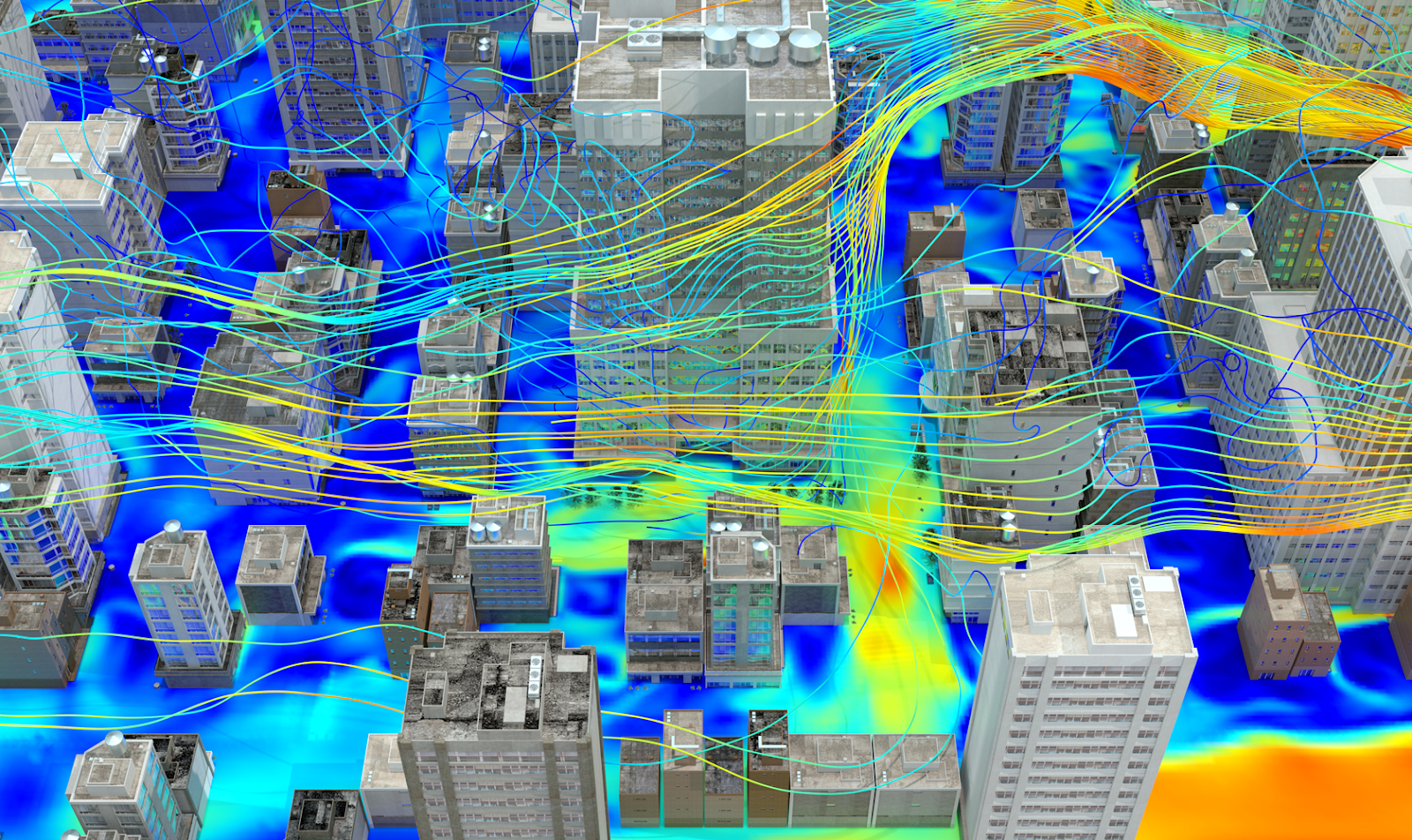
Finally, in the post-processing stage, engineers review the results. They use visual tools like colored contour maps, streamlines, and graphs to understand how the fluid behaves. These visuals help them make design decisions and improvements.
Applications, Benefits, and Future of CFD
Where CFD Is Used Today
CFD plays a major role in many industries.
In aerospace, engineers use it to design more efficient wings, reduce drag, and improve engine performance. It helps make aircraft safer and more fuel-efficient.
In the automotive industry, CFD improves vehicle aerodynamics, engine cooling, and cabin comfort. By reducing air resistance, manufacturers can lower fuel use and emissions.
In heating and cooling systems, CFD helps design better ventilation layouts for buildings, improving energy efficiency and indoor comfort.
In healthcare, it supports the design of medical devices such as inhalers and heart implants. It can also simulate blood flow to help study certain health conditions.
In electronics, CFD helps manage heat inside devices like computers and smartphones. In oil and gas, it predicts fluid flow in pipelines and supports safer operations.
Benefits and Challenges of CFD
One of the biggest advantages of CFD is cost savings. Virtual testing reduces the need for physical prototypes and repeated experiments. It also speeds up product development because engineers can test many design ideas quickly.
CFD provides detailed insights that are hard to obtain through physical testing alone. Engineers can see pressure changes, temperature levels, and flow patterns in areas that may be difficult to measure in real life. It also helps identify design problems early, which prevents costly changes later.
However, CFD also has challenges. High-quality simulations require strong computers and can take time to run. The accuracy of results depends on the user’s knowledge and experience. Choosing the wrong settings or mesh quality can lead to incorrect results. For this reason, simulation results often need to be compared with real-world testing for confirmation.
Emerging Technologies and the Future of CFD
New technologies are making CFD even more powerful. Artificial Intelligence and Machine Learning are being used to speed up simulations and improve predictions. These systems can learn from past simulations and suggest better design options.
Digital twin technology is also growing. A digital twin is a virtual model of a real system that updates with real-time data. This allows engineers to monitor performance and make improvements while the system is operating.
High-performance computing and cloud computing have expanded what CFD can achieve. Engineers can now run large and complex simulations faster and at lower cost, even without owning expensive hardware.
Conclusion
Computational Fluid Dynamics has become an essential tool in modern engineering. It allows engineers to study fluid behavior in a safe, fast, and cost-effective way. By reducing the need for physical testing, improving design accuracy, and supporting innovation, CFD plays a key role in industries such as aerospace, automotive, healthcare, and energy.
As computing power continues to improve and new technologies are integrated, CFD will become even more accessible and efficient. With continued development, it will remain a powerful solution for solving complex engineering challenges and driving future innovation.